
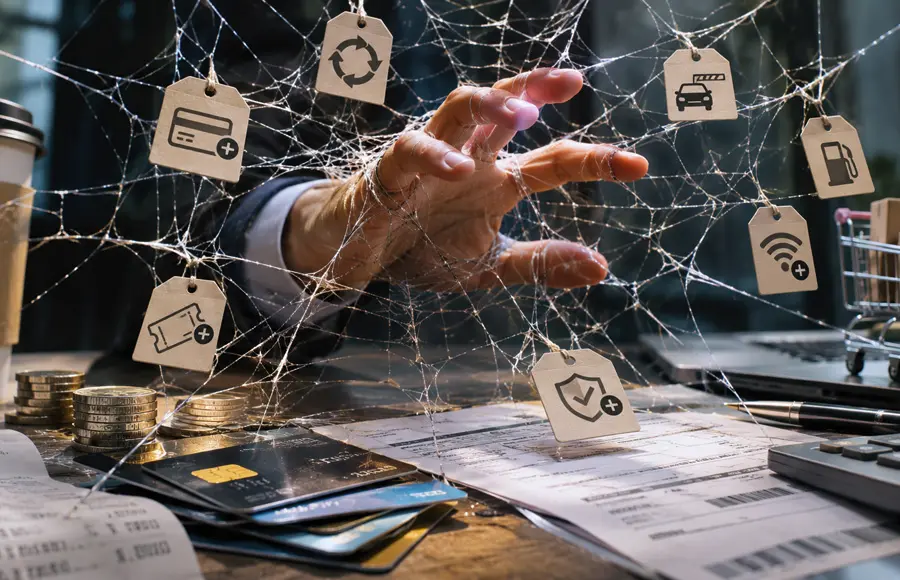
Spider web pricing has been around for decades, but in 2026, it appears to be making a significant comeback. As governments and businesses face increasing financial pressures, more organisations are adopting pricing structures that gradually extract additional payments from consumers.
But is this approach fair, and what happened to transparent, ethical pricing?
The Growing Problem with Hidden Fees
Consider our roads. Once upon a time, taxpayers contributed towards public infrastructure through their taxes. Today those taxes remain, yet motorists can also face hundreds or even thousands of dollars in additional toll charges.
Similar pricing practices are appearing across everyday services. Visit a hairdresser, for example, and you may discover that washing, cutting, colouring and styling are all charged separately. What was once a straightforward service with a single price has become a collection of individual charges.

How Spider Web Pricing Works
I first encountered this concept approximately 20 years ago while attending a business coaching session in Sydney, conducted by two sales specialists from Perth. During the session, we were asked to develop a pricing model. A friend showed me his approach, which resembled a spider’s web. When I questioned the design, he explained that the idea was to draw customers in, then charge them at each stage as they progressed through the service. I was shocked by the concept, although I accepted that businesses were free to establish their own pricing strategies.
Unfortunately, I’ve watched this approach become increasingly common.
Recently, I encountered a situation involving a fee of approximately $60, where the proposed options to resolve or exit the arrangement would have cost $600 or $900. I considered this unethical, but my concerns received little consideration.
Subscription Pricing and Consumer Choice
Software subscriptions are another example.
Previously, consumers could purchase software outright and continue using it for years. Today, many providers require ongoing subscriptions or regular upgrades, even when the improvements are minimal.
While subscription models can offer genuine benefits, they can also create unnecessary ongoing expenses and make it difficult for customers to leave.

Why Ethical Pricing Still Matters
My advice to consumers and small business owners is simple: understand the full cost before committing, question unnecessary fees and carefully review subscription agreements.
Transparent pricing builds trust and lasting business relationships. In an increasingly complicated economy, choosing ethical suppliers who genuinely value their customers is more important than ever.
Written by Terry Murphy from Master Accounting